
Tamil Nadu’s First AI & Robotics Training Initiative – A Major Step Toward a Future-Ready Workforce
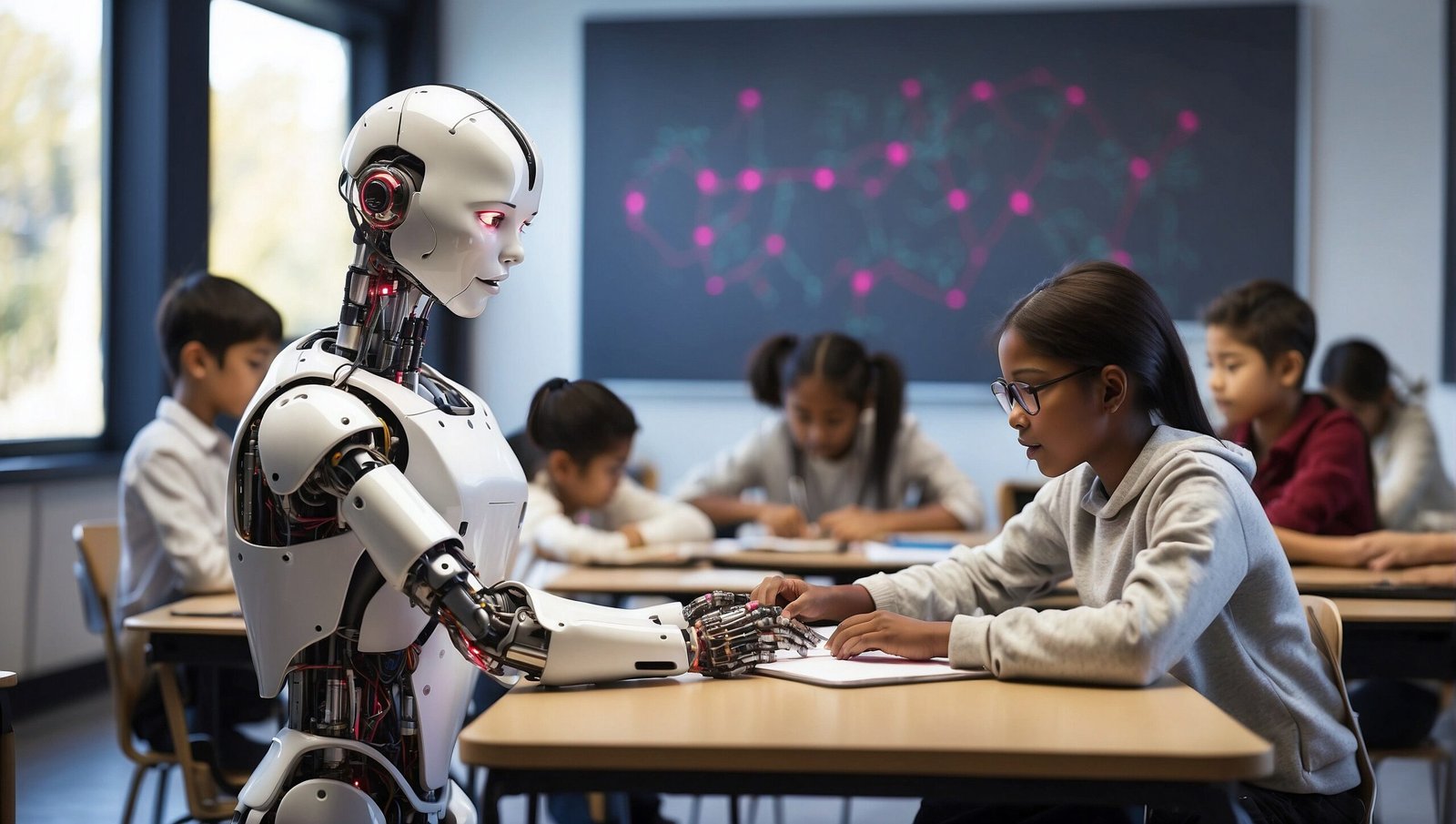
Tamil Nadu has taken a transformative step toward building a technology-driven future by launching one of India’s earliest structured AI & Robotics learning initiatives at the school and foundational level.
Strengthening this initiative further is the establishment of Tamil Nadu’s First NVIDIA Isaac Sim Lab, bringing advanced robotics simulation technology into structured education infrastructure.
As artificial intelligence, automation, and robotics reshape industries globally, early exposure combined with industry-grade tools is no longer optional, it is essential.
This marks a significant evolution in how technical education is introduced, experienced, and aligned with Industry 4.0 requirements.
Why AI & Robotics Education Matters Today
India is rapidly adopting advanced technologies across sectors such as:
- Smart manufacturing (Industry 4.0)
- Automation in logistics & warehousing
- AI-powered healthcare systems
- Robotics in agriculture & infrastructure
- Intelligent surveillance & smart city technologies
Tamil Nadu, being one of India’s leading manufacturing and technology hubs, requires a workforce trained not just in theory but in practical implementation.
Structured AI & Robotics education ensures students are prepared for emerging careers in:
- Robotics Engineering
- Artificial Intelligence
- Machine Learning
- Data Science
- Embedded Systems
- Industrial Automation
The Significance of Tamil Nadu’s First NVIDIA Isaac Sim Lab
The inclusion of NVIDIA Isaac Sim infrastructure elevates this initiative to global standards.
NVIDIA Isaac Sim is a high-fidelity robotics simulation platform built for developing, testing, and validating autonomous robotic systems in realistic 3D virtual environments.
It enables learners to:
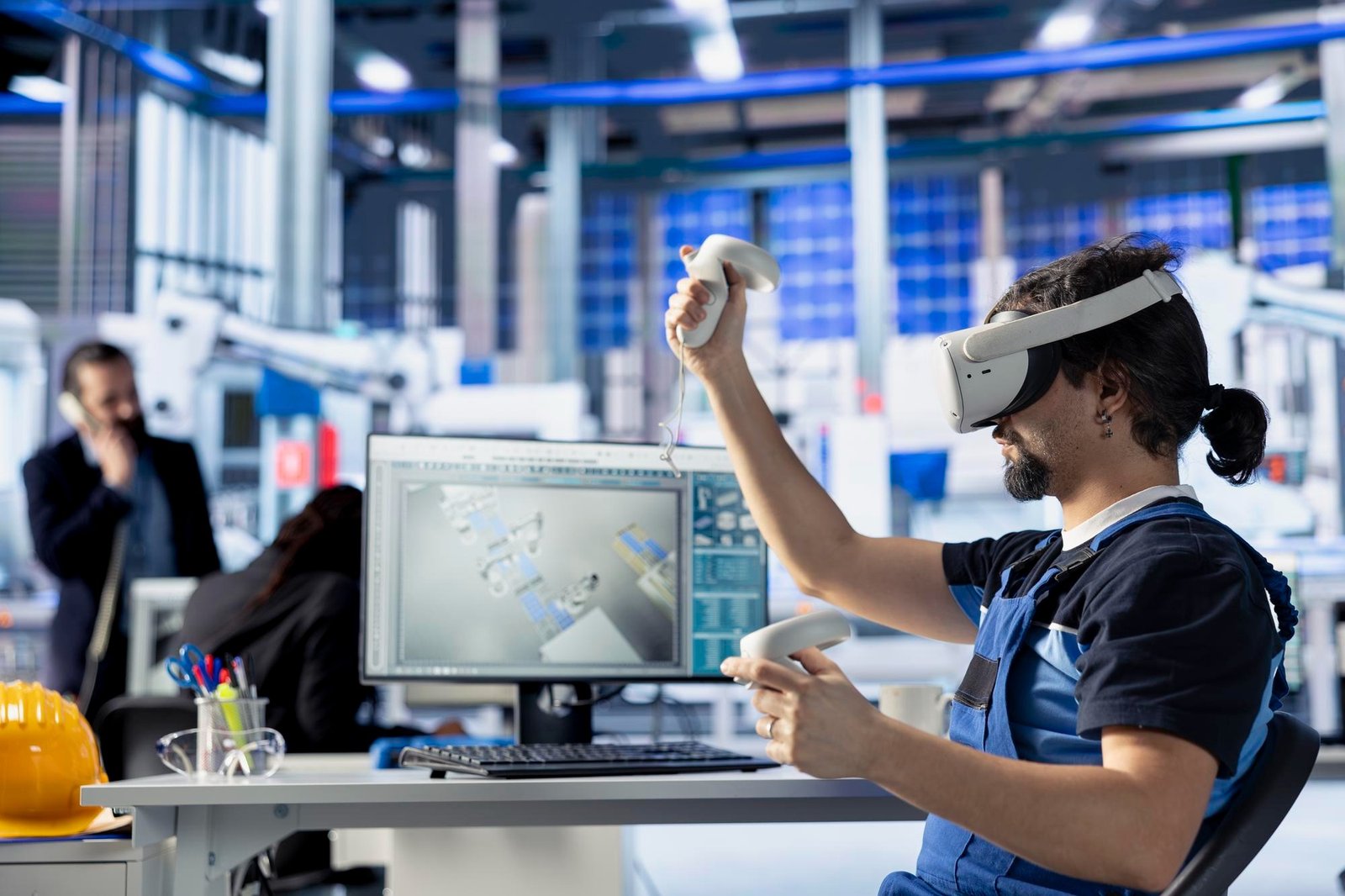
- Simulate robotic behavior before hardware deployment
- Train AI perception models using synthetic data
- Develop autonomous navigation systems
- Build digital twin environments
- Test edge-case scenarios safely
Modern robotics companies increasingly rely on simulation-first development models. Introducing such advanced infrastructure within structured education programs bridges the gap between academic learning and real-world engineering workflows.

What Makes Tamil Nadu’s AI & Robotics Initiative Unique?
This initiative focuses on more than awareness. It integrates:
✔ Early exposure to AI, coding, and robotics
✔ Practical, lab-based learning instead of theory-heavy curriculum
✔ Industry-aligned modules
✔ Access to advanced robotics simulation tools
✔ Encouragement of innovation and problem-solving
By combining physical robotics labs with simulation environments like NVIDIA Isaac Sim, learners gain holistic exposure to design, testing, and deployment methodologies used in global robotics ecosystems.
This approach strengthens Tamil Nadu’s position as a forward-thinking technology state.
Strengthening the State’s Industrial and Technology Ecosystem
Tamil Nadu already hosts:
- 1.Major automotive manufacturing clusters
- 2.Electronics and hardware industries
- 3.IT parks and software development centers
- 4.Emerging AI and deep-tech startups
As automation expands across industries, demand is increasing for professionals skilled in:
1.Artificial Intelligence & Machine Learning
2.Robot Operating System (ROS)
3.Mechatronics
4.Industrial Automation
5.Computer Vision
6.Autonomous Systems
Structured, simulation-backed AI & Robotics training plays a critical role in meeting this demand.
From Foundational Exposure to Career Readiness
While early-stage learning builds awareness, career readiness requires structured progression.
Industry-oriented programs emphasize:
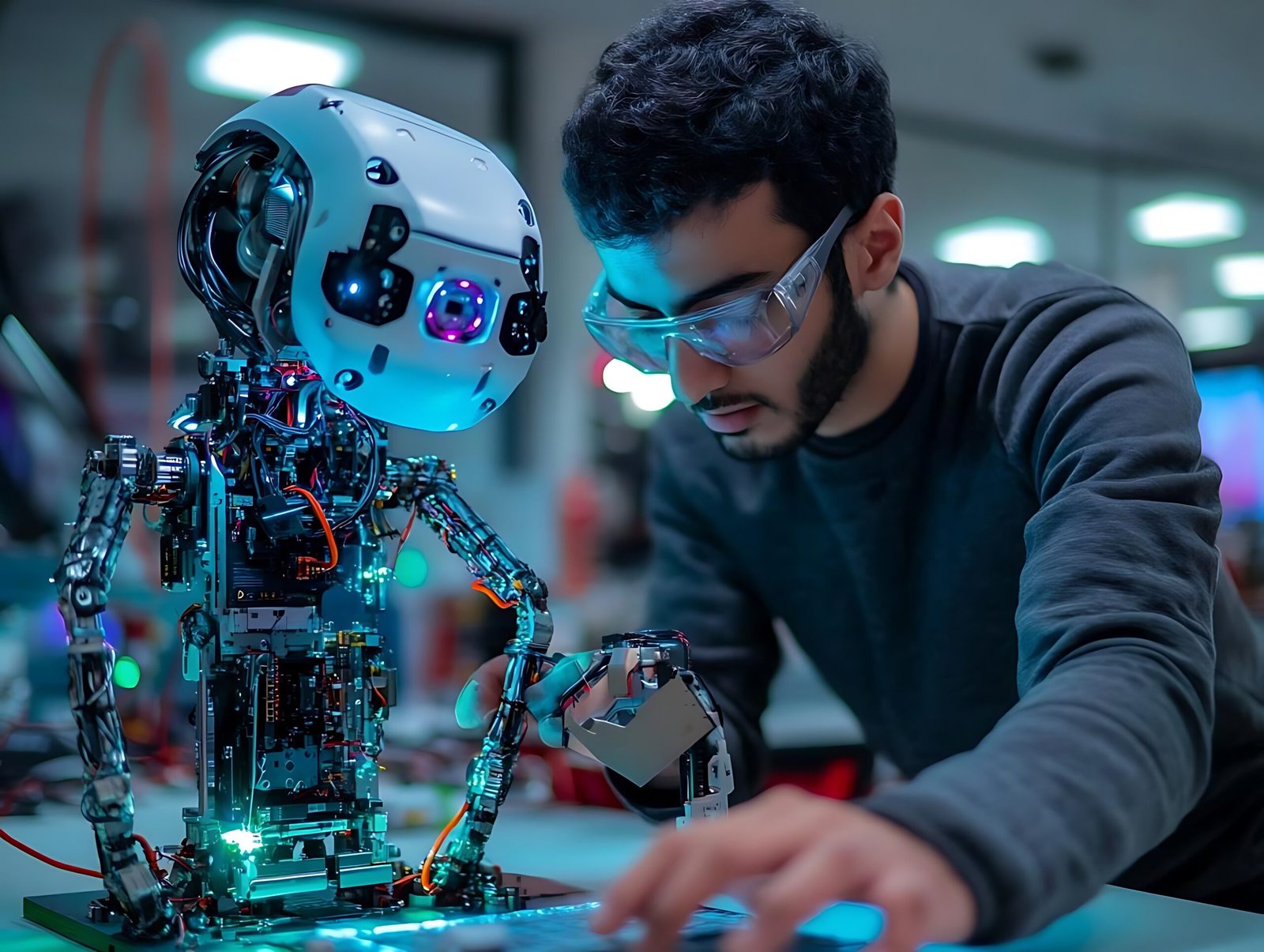
- 1.Hands-on robotics labs
- 2.Simulation-driven validation
- 3.Real-world project implementation
- 4.Internship exposure
- 5.Mentorship from domain experts
- 6.Curriculum aligned with Industry 4.0 standards
Advanced pathways such as:
- 1.AI & Robotics Engineering programs
- 2.Master-level training in ROS 1 & ROS 2
- 3PG-level AI & Machine Learning specialization
enable learners to transition from foundational understanding to professional-level competence.This layered skill development model improves employability and innovation capacity.
Impact on Career Opportunities in 2026 and Beyond
Tamil Nadu’s focus on AI & Robotics education is expected to contribute to:
- Increased demand for skilled robotics engineers
- Growth of automation-driven startups
- Expansion of AI-integrated manufacturing
- Higher employability among STEM graduates
- Innovation-led entrepreneurship
With robotics simulation becoming an essential part of modern development cycles, professionals trained in both physical robotics and simulation platforms gain a competitive advantage in the job market.
Building a Sustainable AI & Robotics Ecosystem
A robust technology ecosystem requires:
- Early-stage exposure
- Skill-focused training infrastructure
- Advanced labs & simulation environments
- Industry collaboration
- Research & development support
- Startup incubation
The establishment of Tamil Nadu’s first NVIDIA Isaac Sim Lab within a structured AI & Robotics initiative reflects a long-term commitment to innovation, skill development, and industry alignment.
It represents infrastructure building not just course delivery.
The Future of AI & Robotics Education in Tamil Nadu
This initiative signals a broader educational transformation:
- Education aligned with Industry 4.0
- Curriculum integrating AI, automation, and robotics
- Emphasis on hands-on innovation
- Stronger academia–industry collaboration
- Adoption of simulation-first engineering methodologies
Students who begin building robotics and AI skills today, supported by advanced lab infrastructure and simulation platforms, will be strategically positioned for high-growth technology roles in 2026 and beyond.
Conclusion
Tamil Nadu’s first structured AI & Robotics training initiative, strengthened by the launch of the state’s first NVIDIA Isaac Sim Lab, represents a strategic investment in future-ready talent.
As automation, artificial intelligence, and robotics drive the next wave of industrial transformation, structured learning combined with advanced simulation capabilities will define career success.
For students aspiring to build long-term careers in AI, robotics, and automation, choosing an industry-aligned pathway supported by advanced technical infrastructure is essential in this rapidly evolving technological landscape.