
Career Scope of Robotics Engineers in India (2026 Guide): Salary, Skills, Industry Demand & Future Growth
India is entering a decisive decade of automation, artificial intelligence, and smart manufacturing. With rapid adoption of Industry 4.0 technologies, the career scope of robotics engineers in India in 2026 is expanding across manufacturing, healthcare, defense, logistics, and emerging AI-driven industries.
According to global industry insights from the International Federation of Robotics, industrial automation adoption is steadily rising in developing economies, including India. Combined with national initiatives like Make in India, robotics engineering is becoming a foundational pillar of industrial transformation.
If you are evaluating a future-ready technology career, robotics engineering stands out as one of the most innovation-driven and cross-disciplinary fields in India.
Why Robotics Engineering Is a High-Growth Career in India
Robotics is no longer limited to factory assembly lines. Today, it powers:
- Smart manufacturing & Industry 4.0 systems
- Autonomous mobility and electric vehicle production
- AI-powered drones and surveillance systems
- Robotic-assisted surgeries
- Agricultural automation
- Warehouse and logistics robotics
- Defense and aerospace systems
India’s increasing investment in semiconductor manufacturing, EV ecosystems, and AI integration into industrial systems is strengthening demand for professionals skilled in automation and robotics.
As highlighted by industry bodies such as NASSCOM, digital transformation and AI-led automation are key employment drivers in India’s technology sector.

What Does a Robotics Engineer Do?
A robotics engineer designs, builds, programs, and maintains intelligent machines capable of performing automated or semi-autonomous tasks.
Core Responsibilities
- Designing robotic hardware and mechanical components
- Programming embedded systems
- Integrating sensors and actuators
- Developing control systems
- Applying AI and machine learning for intelligent decision-making
- Testing and optimizing robotic performance
- Managing real-time data processing
Modern robotics development heavily relies on Robot Operating System (ROS), a middleware framework widely used in research and industrial robotics environments.
Robotics Engineer Salary in India (2026 Outlook)
Salary depends on skills, specialization, and industry domain.
Experience Level | Average Salary Range |
Entry-Level (0–2 years) | ₹4 – ₹7 LPA |
Mid-Level (3–6 years) | ₹10 – ₹18 LPA |
AI + Robotics Specialists | ₹15 – ₹25 LPA |
Senior R&D / Robotics Architects | ₹20+ LPA |
Professionals who combine robotics with AI, computer vision, and embedded systems typically command higher compensation.
Cities such as Chennai, Bengaluru, Pune, and Hyderabad offer strong robotics opportunities due to manufacturing clusters and technology hubs.
Industries Hiring Robotics Engineers in India
One of the strongest indicators of long-term career stability is cross-industry adoption.
1. Automotive & EV Manufacturing
Tamil Nadu, Maharashtra, and Gujarat host major automotive clusters utilizing robotic assembly systems.
2. Semiconductor & Electronics Manufacturing
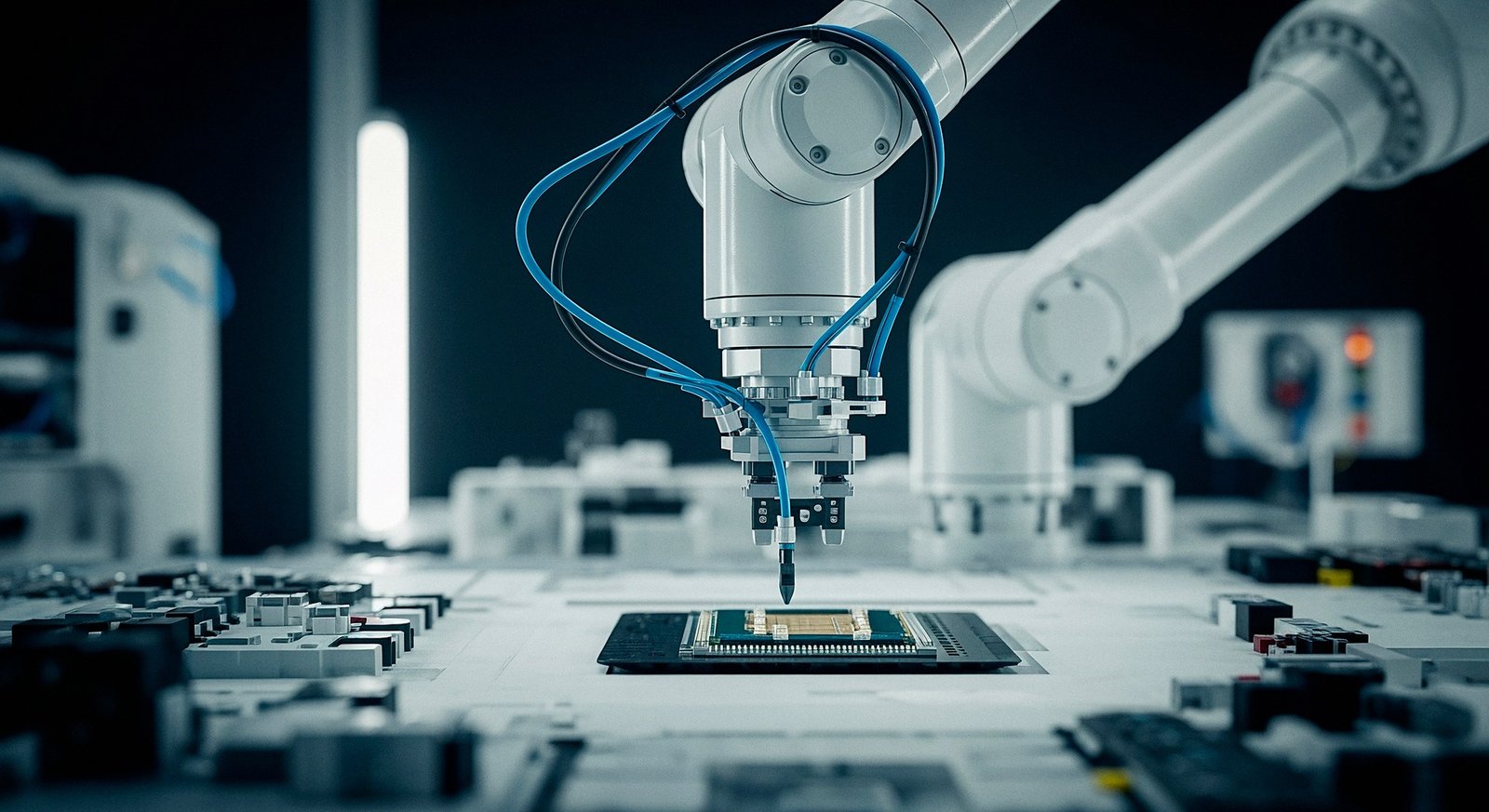
Precision automation is essential for chip fabrication and electronics production.
3. Aerospace & Defense
Unmanned vehicles, drones, and surveillance robotics require advanced engineering expertise.
4. Healthcare & Surgical Robotics
AI-integrated robotic systems are transforming minimally invasive surgeries.
5. Logistics & Warehouse Automation
The rise of e-commerce has accelerated automated picking, sorting, and navigation systems.
6. Agri-Tech & Smart Farming
Autonomous tractors, crop-monitoring drones, and robotic harvesting solutions are emerging rapidly.
This diversification ensures robotics remains a resilient career path.
Modern robotics development heavily relies on Robot Operating System (ROS), a middleware framework widely used in research and industrial robotics environments.

Skills Required to Become a Robotics Engineer in 2026
Robotics is inherently multidisciplinary.
Technical Skills
- Programming (Python, C, C++)
- Embedded systems
- Control systems & automation
- Artificial Intelligence & Machine Learning
- Robot Operating System (ROS)
- Computer vision
- IoT & sensor integration
- Mechatronics fundamentals
Practical Skills
- Problem-solving and analytical thinking
- System integration capability
- Hands-on lab experience
- Real-world project execution
- Debugging and optimization
Employers increasingly prefer candidates with applied project experience over purely theoretical knowledge
Robotics Engineering vs AI Engineering – Which Is Better?
This is a common comparison among students.
Robotics Engineering | AI Engineering |
Focus on physical systems | Focus on algorithms and data |
Mechanical and embedded integration | Software-based intelligence |
Automation hardware | Machine learning models |
Sensor and actuator systems | Data science and predictive models |
The strongest career advantage lies in combining both domains. Robotics systems increasingly depend on AI-driven perception, navigation, and decision-making.
Tamil Nadu as an Emerging Robotics Hub
Tamil Nadu is evolving into a strong manufacturing and technology ecosystem. With automotive production, electronics clusters, and expanding IT infrastructure, the state offers growing opportunities in robotics and automation engineering.
Educational institutions and technical training programs are also expanding focus on AI and robotics integration to reduce future skill gaps and strengthen STEM ecosystems.
Future Scope of Robotics Engineering in India (2026–2030)
The next five years are expected to see growth in:
- AI-driven smart factories
- Autonomous mobility systems
- Defense robotics
- Healthcare automation
- Humanoid robotics research
- Robotics startups in Tier-2 cities
Government initiatives supporting semiconductor manufacturing and industrial automation are likely to further strengthen robotics employment demand.
Robotics engineering is transitioning from a niche specialization to a core component of industrial infrastructure.
Why Robotics Engineering Is a Smart Career Choice in 2026
✔ Strong salary growth potential
✔ Cross-industry demand
✔ Global mobility opportunities
✔ Integration with AI and automation
✔ Long-term relevance in Industry 4.0
Robotics uniquely combines mechanical engineering, electronics, artificial intelligence, and software systems — making it one of the most interdisciplinary and future-oriented careers in technology.
Frequently Asked Questions (FAQs)
Is robotics a good career in India in 2026?
Yes. Automation adoption across manufacturing, healthcare, logistics, and defense is driving sustained demand.
What is the starting salary of a robotics engineer in India?
Entry-level salaries generally range between ₹4–7 LPA, depending on skillset and specialization.
Which skills are most important?
Programming, embedded systems, AI integration, ROS, and hands-on automation projects are highly valued.
Which states offer strong robotics opportunities?
Tamil Nadu, Maharashtra, Karnataka, and Telangana have strong manufacturing and technology ecosystems.
Final Thoughts
India’s automation journey is accelerating. Robotics engineering sits at the intersection of artificial intelligence, mechanical design, and smart manufacturing.
For students and professionals seeking a future-proof career aligned with Industry 4.0, robotics offers strong growth, competitive salaries, and long-term technological relevance.